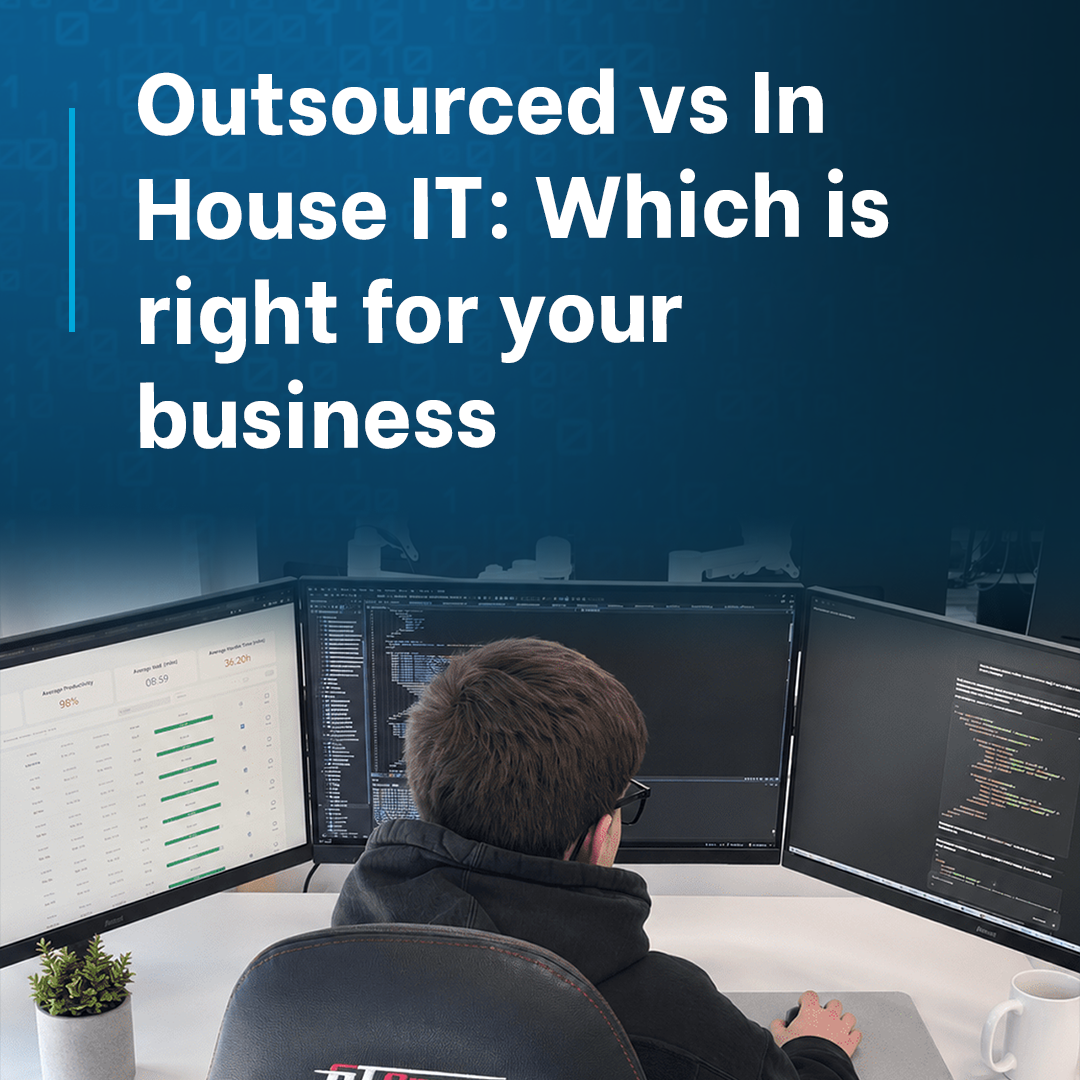
If your business relies on technology every day, you need someone to keep it running and help when problems come up. Should that support come from your own IT employee, a managed service provider (MSP), or a mix of both?
There’s no single answer for every business. Your needs, budget and the amount of support your staff require all matter.
What does in-house IT give you?
An in-house employee gets to know your people, systems and processes. They’re part of your business and can be on hand when staff need help. That can be valuable if you need regular on-site support or rely on specialist systems.
But hiring someone involves more than their salary. Allow for recruitment, employer National Insurance, pension contributions, equipment and training. You’ll also need to plan for cover when they’re on annual leave or off sick. The government’s guide to employment costs outlines these additional expenses. Most workers are also entitled to paid annual leave, so consider how you’ll keep IT work moving while your employee is away.
What can an outsourced provider offer?
An MSP gives you access to a support team without having to recruit each specialist yourself. Depending on your agreement, they may provide help desk support, system monitoring, security and backup management.
This can suit you if you need several types of IT support but don’t have enough work to justify a full-time hire. An MSP may also provide cover across a team, so support doesn’t depend on one person being available.
Check the contract carefully, though. Some services may cost extra, and a fixed monthly fee doesn’t always include everything you need. The NCSC guide to choosing an MSP recommends checking the provider’s contract, service levels and security arrangements.
When is an MSP more cost-effective than hiring?
Compare the MSP’s annual fee with the full cost of employing someone. Include recruitment, employment costs, equipment and training, as well as a plan for covering support during annual leave and sickness.
An MSP may be better value if your support needs are spread across several areas, or if you need dependable cover but not a full-time employee. Hiring in-house may make more sense if you need someone working on IT every day, on-site regularly or closely involved in specialist systems.
Compare both options over a year. Check what the MSP’s fee includes, what it charges extra for and whether the service can grow with your business. Then weigh that against the cost and capacity of an employee. The better value depends on the support you need.
Could a mix of both work?
You don’t have to choose one or the other. With co-managed IT, your employee can focus on business-specific systems and priorities while an MSP provides extra expertise, help desk cover or monitoring.
This can give you more flexibility, but make sure responsibilities are clear. Agree who handles each system, how issues are passed between the teams and who takes the lead during an incident.
A note from our Managing Director
“For an SME, the right IT setup is the one that gives your people the support they need and fits your budget. That might be an in-house hire, an MSP or a mix of both. The important thing is to understand what’s covered, who’s responsible and what the full cost will be.”
Ryan, Managing Director
Choose the support that fits your business
Think about how quickly your staff need help, whether you need regular on-site support and which skills are missing. Compare the total cost, the services included and the cover you’ll have when someone is unavailable.
If you’re considering an MSP, check the SLA, support hours, response targets and exit terms. Make sure you know who owns your data and documentation, and how the provider will hand them back if you leave.
At Network Ltd, we support businesses with managed IT and cyber security. If you’re weighing up your options, find out more about our IT support.